Bamboo Kitchen Utensils Wholesale: Why They’re Trending in 2026
In recent years, the demand for sustainable living has transformed the way people shop, cook, and design their homes. One of the most noticeable shifts in kitchenware is the growing popularity of bamboo utensils. From eco-conscious millennials to modern homemakers and restaurant owners, bamboo kitchen products have become a preferred choice worldwide.
The rise of Bamboo Kitchen Utensils Wholesale markets reflects this change. Businesses, retailers, and online sellers are increasingly sourcing bamboo products in bulk to meet growing consumer demand. But what exactly makes bamboo kitchen utensils trend in 2026 and beyond?
This comprehensive guide explores why bamboo utensils are dominating modern kitchens, their benefits, market trends, environmental impact, and why wholesale buyers are investing heavily in them.
The Rise of Sustainable Living
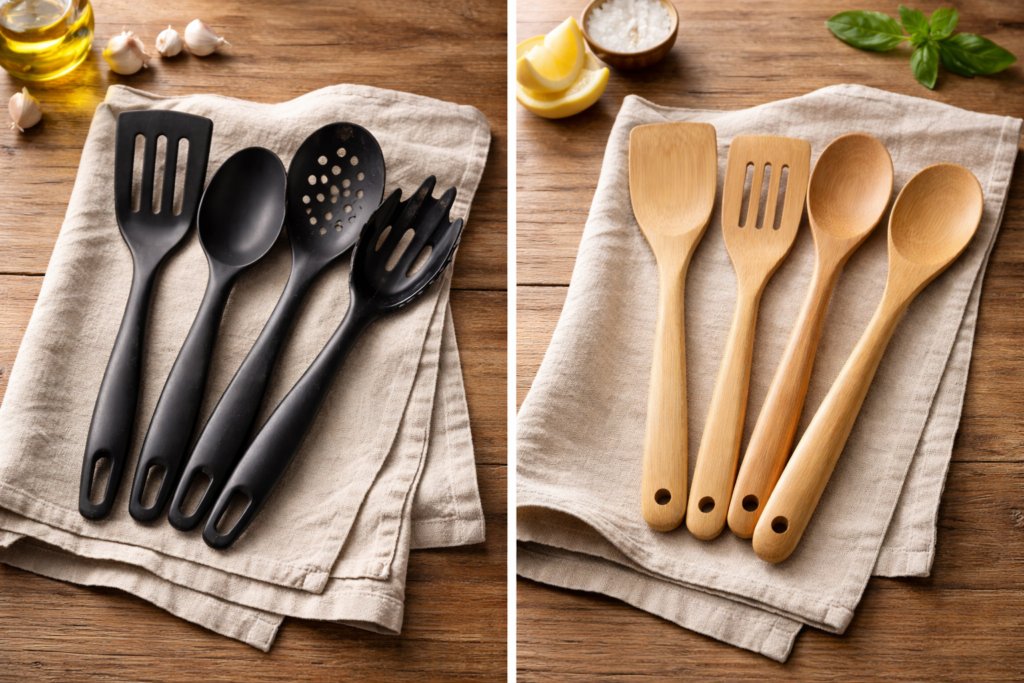
Today’s consumers are more environmentally aware than ever. Climate change, plastic pollution, and deforestation have pushed people to rethink their purchasing decisions. Kitchens, once filled with plastic tools, are now shifting toward natural materials.
Bamboo stands out because:
It is biodegradable
It grows rapidly without harmful chemicals
It requires minimal water
It regenerates naturally without replanting
Modern homes aim to reduce carbon footprints. Replacing plastic spatulas, spoons, and ladles with bamboo alternatives is a small but impactful step toward sustainable living.
What Makes Bamboo Unique?
Bamboo is technically a grass, not a wood. Although it looks similar to timber, its botanical classification gives it several unique advantages that make it superior for sustainable products. This distinct characteristic is one of the main reasons why bamboo has become the preferred material in modern kitchens and why the Bamboo Kitchen Utensils Wholesale market continues to grow rapidly.
Unlike traditional hardwood trees that take decades to mature, bamboo grows quickly, regenerates naturally, and offers exceptional strength. These natural qualities make it one of the most sustainable and practical materials available for kitchenware production.
Rapid Growth and Exceptional Renewability
Bamboo is one of the fastest-growing plants on Earth. Certain species can grow up to 2–3 feet in just 24 hours under optimal conditions. In comparison, hardwood trees can take 20 to 50 years to fully mature.
This rapid growth provides several environmental and commercial benefits:
Bamboo regenerates from its own root system after harvesting
It does not require replanting
It needs minimal water compared to many crops
It typically grows without heavy use of fertilizers or pesticides
Because of this, bamboo is considered a highly renewable resource. Its fast regrowth cycle allows manufacturers to produce bamboo kitchen products without contributing to deforestation. For businesses investing in Bamboo Kitchen Utensils Wholesale, this ensures a consistent and sustainable supply chain.
Superior Durability and Strength
Despite being lightweight, bamboo is remarkably strong. Its fiber structure is dense and tightly packed, giving it impressive tensile strength. In fact, when compared by weight, bamboo can be stronger than many hardwoods and even rivals steel in certain structural comparisons.
For kitchen applications, this strength translates into practical advantages:
Bamboo spatulas and spoons resist cracking and breaking
Cutting boards maintain their structure over long-term use
Utensils can withstand frequent stirring, flipping, and serving
They hold up well under moderate heat exposure
Because of this durability, bamboo kitchen utensils offer long-lasting performance, making them cost-effective for both households and wholesale buyers. Lower product damage and longer lifespan also mean fewer replacements and higher customer satisfaction.
Natural Antibacterial Properties
One of bamboo’s most valuable qualities for kitchen use is its natural resistance to bacteria. Bamboo contains a bio-agent often referred to as “bamboo kun,” which helps inhibit bacterial growth.
In a kitchen environment where hygiene is essential, this property offers important benefits:
Reduced bacterial accumulation on surfaces
Lower risk of odor retention
Less likelihood of cross-contamination
Safer food preparation compared to plastic alternatives
While proper cleaning is always necessary, bamboo’s natural antimicrobial characteristics provide an additional layer of protection. This makes bamboo utensils particularly appealing to health-conscious families and eco-friendly consumers.
Environmental Advantages Over Wood and Plastic
Because bamboo is a grass, harvesting it does not cause the same level of environmental impact as cutting down hardwood forests. Its root system remains intact after harvesting, allowing it to regrow quickly without soil damage.
Additional environmental benefits include:
High carbon absorption capacity
Reduced soil erosion
Biodegradability and compostability
Minimal processing requirements compared to plastic
Unlike plastic utensils, which can take hundreds of years to decompose, bamboo products naturally break down without releasing harmful toxins into the environment.
Why This Matters for Modern Homes
Modern consumers are looking for products that combine sustainability, durability, safety, and aesthetics. Bamboo meets all these requirements. Its natural grain, warm color tone, and organic finish complement contemporary kitchen designs, especially those focused on minimalism and eco-living.
This combination of renewability, strength, hygiene, and visual appeal is exactly why bamboo is no longer just a trend. It represents a long-term shift toward responsible living and sustainable consumption — and it explains the rapid expansion of the Bamboo Kitchen Utensils Wholesale industry worldwide.
Why Bamboo Kitchen Utensils Wholesale Is Booming
The wholesale market for bamboo utensils is expanding rapidly for several reasons:
1. Increasing Consumer Demand
Eco-friendly products are no longer niche; they are mainstream. Retailers stock bamboo utensils because customers actively search for them.
2. Higher Profit Margins
Wholesale buyers can purchase bamboo kitchen utensils at competitive rates and resell them with attractive margins.
3. Global Export Opportunities
Bamboo products are exported worldwide, especially to the USA, Europe, and Australia, where sustainability trends are strongest.
4. E-commerce Growth
Online marketplaces promote eco-friendly products heavily. Bamboo utensils are often featured as sustainable alternatives, boosting wholesale demand.
Benefits of Bamboo Kitchen Utensils
Bamboo kitchen tools are becoming a staple in modern households not just because they are trendy, but because they offer a powerful combination of sustainability, safety, comfort, and design appeal. These advantages are major reasons behind the rapid growth of the Bamboo Kitchen Utensils Wholesale market worldwide.
Below is a detailed explanation of why bamboo utensils are transforming modern kitchens.
1. Eco-Friendly and Environmentally Responsible
One of the most significant advantages of bamboo kitchen utensils is their environmental sustainability. Unlike plastic, which is derived from petroleum and can take hundreds of years to decompose, bamboo is a natural and biodegradable material.
When disposed of properly, bamboo decomposes naturally without releasing toxic chemicals into the soil or water. This makes it an excellent choice for eco-conscious households aiming to reduce their environmental footprint.
Additionally:
Bamboo grows rapidly and regenerates without replanting
It requires minimal water and no harmful pesticides
Its cultivation helps reduce carbon dioxide levels
It contributes less to landfill waste compared to plastic
As more consumers prioritize sustainability, bamboo utensils have become an essential part of eco-friendly kitchen transitions. For retailers and suppliers, the rising demand for green products has significantly boosted the Bamboo Kitchen Utensils Wholesale sector.
2. Safe for Non-Stick Cookware
Modern kitchens often rely on non-stick cookware for convenient, low-oil cooking. However, using metal utensils on non-stick surfaces can scratch the coating, reducing the lifespan of pans and potentially releasing harmful particles into food.
Bamboo utensils solve this problem effectively.
Because bamboo has a naturally smooth texture and moderate hardness, it does not damage delicate cookware surfaces. The edges are gentle yet strong enough to stir, flip, and scrape without causing scratches.
This makes bamboo utensils:
Ideal for non-stick pans
Safe for ceramic-coated cookware
Suitable for induction and modern kitchen sets
Protective of expensive cookware investments
Home cooks and professional chefs alike prefer bamboo tools for preserving the quality of their cookware, making them a practical long-term solution.
3. Lightweight and Comfortable to Use
Comfort is an important but often overlooked factor in kitchen tools. Bamboo utensils are naturally lightweight, which reduces hand fatigue during extended cooking sessions.
Their ergonomic feel provides several benefits:
Easy grip for better control
Reduced strain on wrists and hands
Comfortable handling for daily use
Suitable for both beginners and professional cooks
Unlike heavy metal utensils that can feel cumbersome, bamboo tools offer balance and flexibility. This makes them especially useful for tasks like stirring thick sauces, sautéing vegetables, or mixing batters.
Because they are so comfortable and easy to use, many families prefer complete bamboo utensil sets in their kitchens, further driving wholesale demand globally.
4. Heat Resistant and Safer to Handle
Another major advantage of bamboo is its low heat conductivity. Unlike metal utensils, bamboo does not transfer heat quickly. This significantly reduces the risk of burns while cooking.
When left inside a pot or pan:
Bamboo handles remain relatively cool
There is less risk of accidental hand burns
The utensil will not become dangerously hot
This makes bamboo a safer option in busy kitchens, especially in homes with children or elderly family members.
Additionally, bamboo does not melt like plastic when exposed to high temperatures. This prevents harmful chemical release and ensures food safety. Its heat resistance combined with structural strength makes it reliable for daily cooking tasks.
5. Stylish, Minimalistic Aesthetic
Beyond functionality, bamboo utensils offer strong visual appeal. Modern interior design trends focus heavily on natural materials, earthy tones, and minimalistic aesthetics.
Bamboo fits perfectly into this design philosophy.
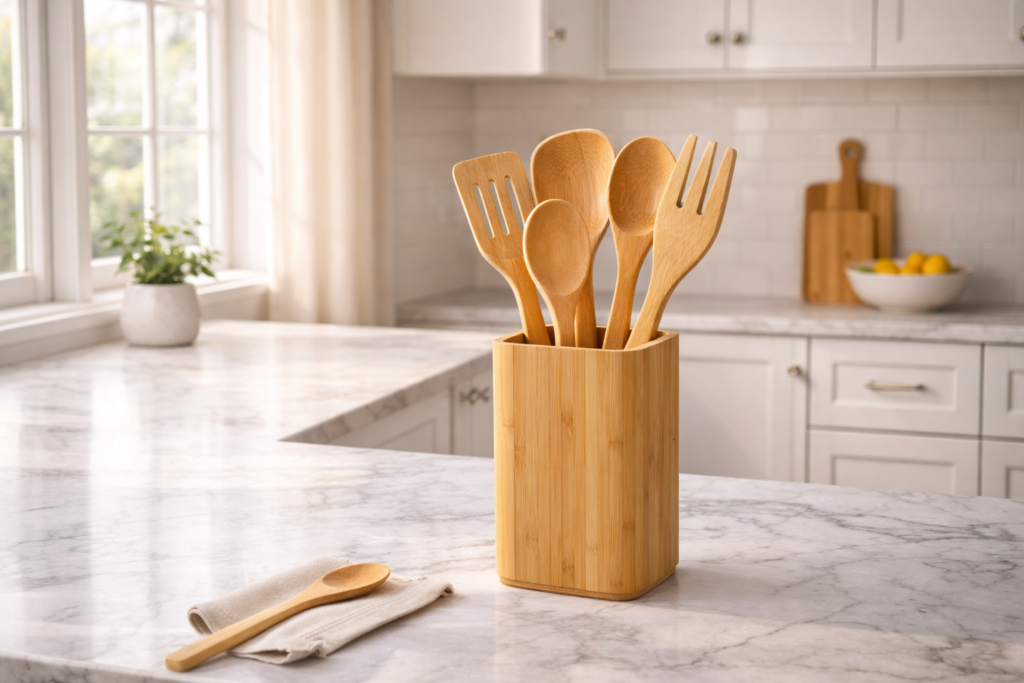
Its warm golden color and smooth grain texture create a soft, organic look that enhances kitchen décor. Whether placed in a countertop holder or displayed alongside marble countertops and white cabinets, bamboo utensils elevate the visual atmosphere of the kitchen.
They complement:
Scandinavian-style kitchens
Minimalist interiors
Farmhouse themes
Eco-luxury home designs
Because of their aesthetic value, bamboo utensils are not only cooking tools but also decorative elements. This dual function increases their appeal in retail markets and explains why Bamboo Kitchen Utensils Wholesale suppliers often sell complete coordinated sets.
Why These Benefits Matter
When a product combines sustainability, safety, comfort, durability, and design appeal, it becomes more than just a trend—it becomes a lifestyle choice.
Bamboo kitchen utensils check all these boxes. They help households reduce plastic usage, protect cookware, ensure safe cooking, and enhance kitchen aesthetics. These comprehensive benefits explain why bamboo utensils are no longer niche items but mainstream essentials in modern homes worldwide.
The growing consumer awareness around environmental responsibility and healthier living ensures that bamboo kitchenware will continue to dominate global markets for years to come.
Trending Bamboo Kitchen Products in 2026
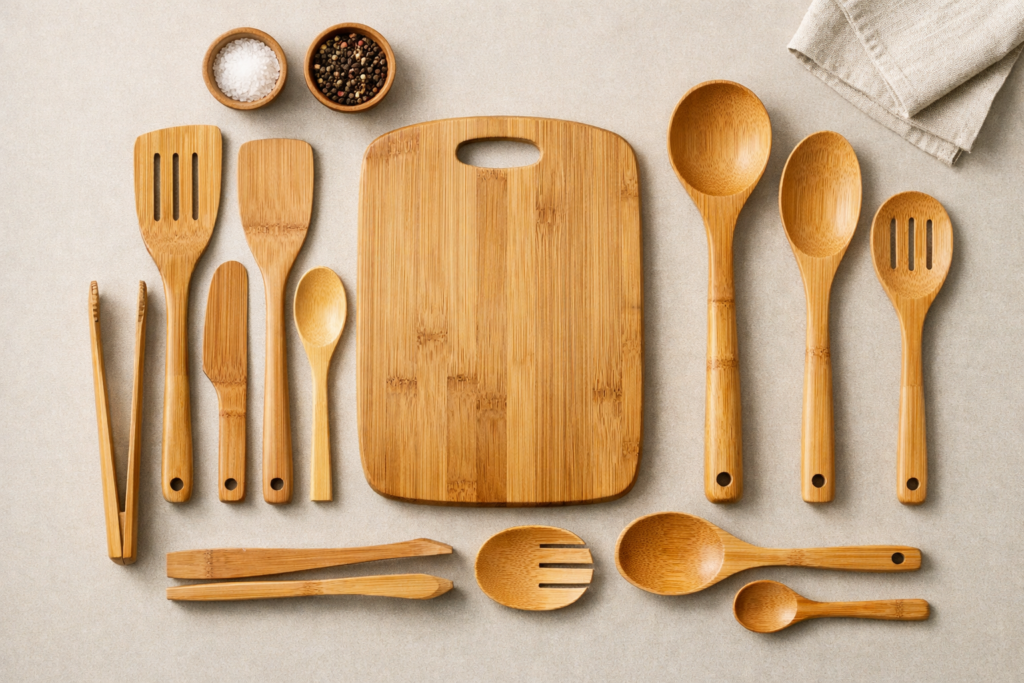
1️⃣ Bamboo Spatula
Description:
Bamboo spatulas are lightweight yet extremely durable kitchen tools designed for flipping, stirring, and sautéing. Their smooth edges protect non-stick cookware while offering heat resistance.
Features:
100% natural bamboo
Heat resistant
Smooth polished finish
No chemical coating
Wholesale Advantage:
Ideal for bulk kitchen sets, restaurants, and eco-retail stores.
2️⃣ Bamboo Cooking Spoon
Description:
Perfect for stirring soups, curries, and sauces, bamboo cooking spoons are strong, crack-resistant, and naturally antibacterial.
Benefits:
Does not absorb odor
Lightweight & ergonomic
Scratch-free cooking
Wholesale Demand:
High resale value due to everyday usage.
3️⃣ Bamboo Ladle
Description:
Designed for serving soups and gravies, bamboo ladles are sturdy and stylish. They combine function and sustainability.
Why Trending:
Eco-conscious alternative to plastic ladles
Rustic kitchen aesthetic
4️⃣ Bamboo Tongs
Description:
Bamboo tongs are perfect for flipping vegetables, serving salads, and grilling.
Features:
Strong grip
Spring-based design (in some models)
Safe for hot cookware
Wholesale Use:
Popular in restaurants and catering businesses.
5️⃣ Bamboo Cutting Board
Description:
Bamboo cutting boards are knife-friendly, durable, and resistant to moisture.
Advantages:
Less porous than wood
Long-lasting
Elegant kitchen display piece
Wholesale Opportunity:
One of the highest selling bamboo kitchen products globally.
6️⃣ Bamboo Serving Tray
Description:
Stylish bamboo trays are used for serving tea, coffee, and snacks.
Benefits:
Lightweight
Elegant look
Eco-friendly gift option
7️⃣ Complete Bamboo Utensil Set
Description:
A complete Bamboo Kitchen Utensils Wholesale set usually includes 6–12 tools such as spatula, spoon, ladle, tongs, and turner.
Why Best Seller:
Perfect housewarming gift
High perceived value
Great for Amazon & Shopify stores
Bamboo Kitchen Utensils in Modern Interior Design
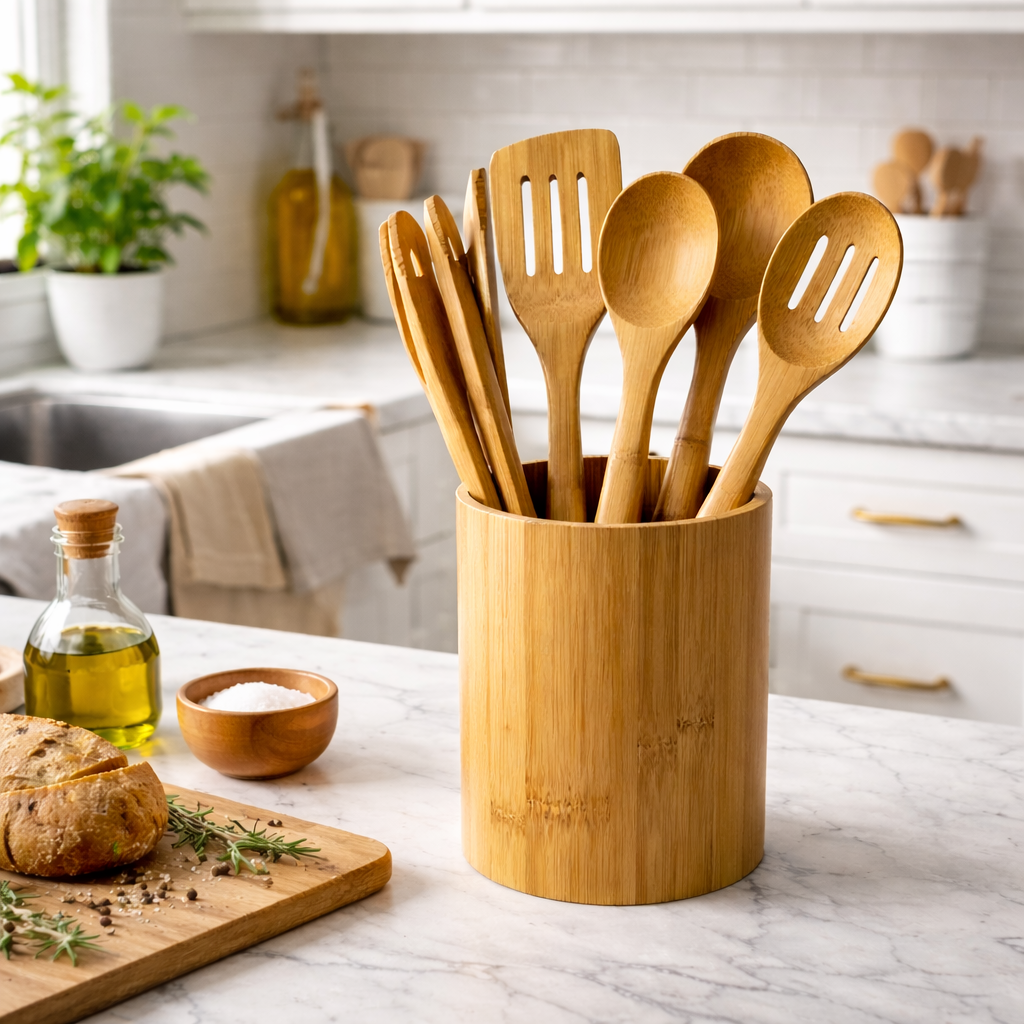
Modern homes today are designed around three core principles: minimalism, natural tones, and sustainable décor. Homeowners are moving away from cluttered, overly decorative interiors and instead embracing clean lines, functional spaces, and materials that feel authentic and calming. The kitchen, being one of the most used areas in any home, reflects this shift more than ever.
Minimalism
Minimalism focuses on simplicity, functionality, and purposeful design. Instead of overcrowding countertops with unnecessary tools and decorative pieces, modern kitchens emphasize organized layouts and carefully selected essentials. Bamboo kitchen accessories align perfectly with this philosophy. Their clean design, smooth texture, and subtle grain pattern add beauty without overwhelming the space. A bamboo utensil holder with neatly arranged spoons and spatulas creates a visually pleasing yet highly functional setup.
Natural Tones
Contemporary kitchen designs often revolve around neutral color palettes such as white, beige, soft gray, and warm earthy shades. Natural materials play a key role in balancing these tones. Bamboo, with its warm golden hue and organic texture, introduces a sense of softness and warmth to otherwise sleek and modern spaces.
It blends effortlessly with:
Marble or quartz countertops
White or cream cabinetry
Matte black fixtures
Stone backsplashes
Wooden flooring
The subtle contrast between cool marble surfaces and warm bamboo accents creates depth and visual harmony in the kitchen.
Sustainable Décor
Sustainability has become a major design priority rather than an afterthought. Consumers are intentionally choosing materials that are renewable, biodegradable, and environmentally responsible. Bamboo perfectly supports this eco-conscious mindset.
By incorporating bamboo accessories such as utensil sets, cutting boards, trays, and storage containers, homeowners can reduce their reliance on plastic and synthetic materials while maintaining a stylish interior. Designers frequently recommend bamboo elements to create kitchens that feel organic, breathable, and connected to nature.
Creating Warm and Organic Kitchen Spaces
Interior designers often use bamboo to soften modern kitchens that might otherwise appear too sterile or industrial. The natural grain and texture add warmth and personality, transforming a simple cooking area into a welcoming, lived-in space.
When paired with indoor plants, linen textiles, and soft lighting, bamboo accessories enhance the overall ambiance. The result is a kitchen that feels calm, balanced, and environmentally aligned — a space that reflects both modern design trends and responsible living.
In short, bamboo is not just a functional material for kitchen tools; it is an aesthetic element that supports the evolving identity of modern, sustainable homes.
Why Retailers Prefer Bamboo Kitchen Utensils Wholesale
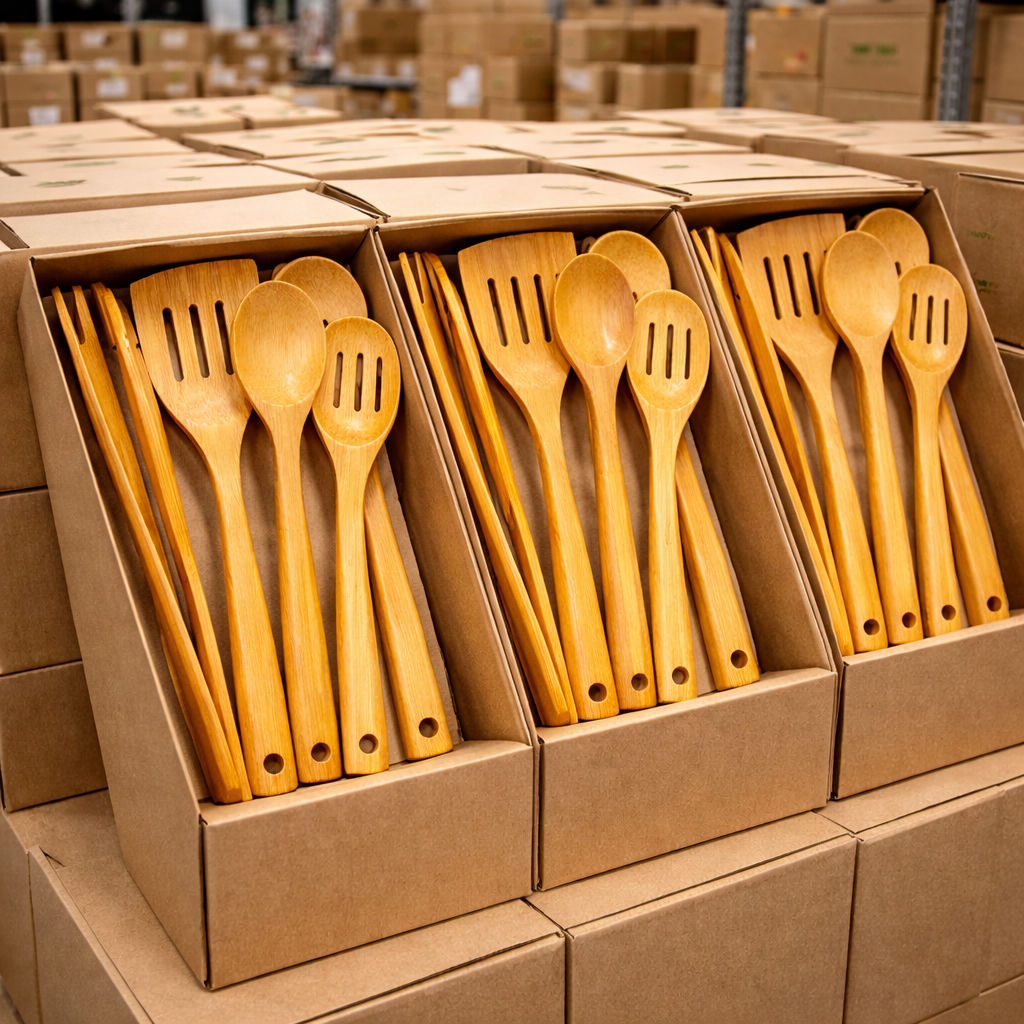
Low Investment, High Demand
Bamboo kitchen utensils represent one of the most profitable product categories in the eco-friendly home segment because they combine low production costs with consistently high consumer demand. As sustainability becomes a priority for households worldwide, more consumers are actively replacing plastic and metal kitchen tools with natural alternatives. This shift creates a stable and growing market for bamboo products.
From a business perspective, wholesale purchasing significantly reduces per-unit costs. When retailers buy in bulk directly from manufacturers or distributors, they benefit from economies of scale. Lower procurement costs allow businesses to maintain competitive retail pricing while still achieving healthy profit margins.
Additionally, bamboo utensils are lightweight and compact, which reduces shipping and storage expenses. This makes them especially attractive for:
E-commerce sellers
Amazon FBA businesses
Small retail stores
Eco-friendly startups
Dropshipping brands
Because of their everyday utility, bamboo utensils are not seasonal products. They sell consistently throughout the year, ensuring steady cash flow rather than fluctuating demand. The combination of affordability, sustainability trends, and universal kitchen use makes them a low-risk, high-demand investment opportunity.
Custom Branding Opportunities
One of the biggest advantages of entering the bamboo utensil market is the availability of private labeling and custom branding options. Many wholesale suppliers offer flexible customization services that allow businesses to create a unique brand identity without owning manufacturing facilities.
Retailers can customize:
Logo engraving on utensils
Printed or embossed kraft packaging
Eco-friendly tags and sleeves
Custom box designs
QR codes linking to brand stories
Sustainable brand messaging
Private labeling enables businesses to position their products as premium, eco-conscious, or luxury kitchenware, depending on their target audience. Instead of competing solely on price, brands can compete on design, packaging quality, and brand values.
This branding flexibility also helps in building customer loyalty. When buyers associate bamboo utensils with a specific brand experience—such as elegant packaging, sustainability messaging, or modern aesthetics—they are more likely to return for repeat purchases.
Furthermore, customized bamboo utensil sets perform well in online marketplaces because strong branding improves:
Product differentiation
Click-through rates
Customer trust
Perceived value
Conversion rates
In a crowded eco-products market, branding becomes the key factor that separates successful businesses from generic sellers.
Gift Market Potential
Beyond daily kitchen use, bamboo utensil sets have strong potential in the gifting industry. Modern consumers increasingly prefer gifts that are both meaningful and practical. Bamboo utensils perfectly fit this expectation because they combine sustainability, style, and functionality.
These products are particularly popular for:
Housewarming gifts
Wedding presents
Bridal shower hampers
Festive gift boxes
Corporate gifting
Eco-conscious holiday bundles
Their natural appearance and minimalist aesthetic make them visually appealing, especially when presented in eco-friendly kraft boxes or reusable packaging. Many buyers appreciate gifts that align with environmental values, and bamboo utensils symbolize responsible living.
For weddings and housewarming events, bamboo kitchen sets represent new beginnings, warmth, and sustainable living—making them emotionally meaningful gifts. Corporate clients also choose bamboo products for employee gifting programs because they reflect socially responsible branding.
Retailers can increase average order value by offering:
Premium gift packaging
Personalized engraving
Bundled kitchen starter kits
Limited-edition festive collections
The gifting segment not only expands the target market but also allows businesses to charge higher prices for curated or premium packaging options.
Care and Maintenance
How to Increase the Longevity of Bamboo Utensils
Bamboo kitchen utensils are naturally durable and resilient, but like any natural material, they require proper care to maintain their strength, appearance, and performance over time. With the right maintenance routine, bamboo utensils can remain in excellent condition for years, making them a long-term sustainable investment for your kitchen.
1. Hand Wash Only
Although it may be tempting to place bamboo utensils in the dishwasher for convenience, this should always be avoided. Dishwashers expose utensils to prolonged heat, high-pressure water, and harsh detergents. These factors can cause bamboo fibers to weaken, crack, or warp over time.
Instead, gently wash bamboo utensils by hand using:
Mild dish soap
Warm (not boiling) water
A soft sponge or cloth
Hand washing preserves the natural structure of the bamboo and prevents surface damage. It also helps maintain the smooth finish and prevents splintering.
2. Avoid Soaking in Water
Bamboo is highly resistant to moisture compared to many types of wood, but it is still a natural plant-based material. Prolonged soaking in water can cause the fibers to swell, leading to cracks, splitting, or warping once the utensil dries.
After cooking or cleaning:
Do not leave utensils submerged in the sink
Avoid storing them in wet containers
Clean them promptly after use
Quick washing followed by immediate drying prevents water absorption and protects the integrity of the material.
3. Dry Immediately
After washing, it is essential to dry bamboo utensils thoroughly with a clean towel. Leaving them to air-dry while wet for extended periods may allow moisture to penetrate the surface.
To ensure proper drying:
Wipe each utensil completely with a dry cloth
Store in a well-ventilated utensil holder
Avoid closed, damp drawers
Proper drying prevents mold formation, discoloration, and long-term structural damage. A dry environment helps bamboo retain its strength and natural beauty.
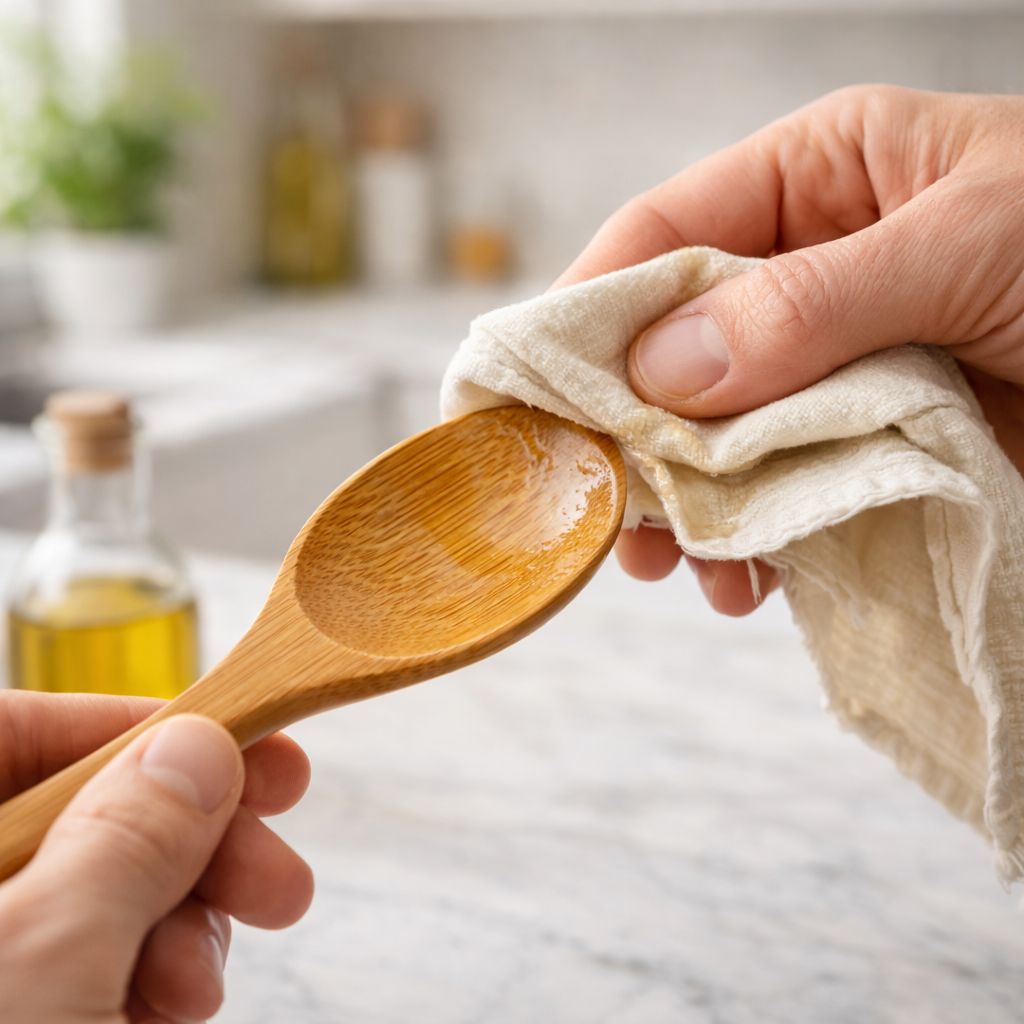
4. Apply Food-Safe Oil Occasionally
Over time, frequent washing can cause bamboo to lose some of its natural oils, making the surface appear dull or slightly rough. To restore moisture and maintain a polished finish, applying a small amount of food-safe mineral oil or coconut oil is recommended.
Oil application benefits include:
Preventing dryness and cracking
Enhancing natural grain color
Improving water resistance
Maintaining a smooth texture
Simply apply a small amount of oil using a soft cloth, rub it evenly across the surface, and allow it to absorb for several hours before wiping off any excess. Performing this maintenance once every few weeks (or monthly, depending on use) significantly extends product life.
Long-Term Durability
When properly maintained, bamboo utensils can last for many years without losing their strength or aesthetic appeal. Unlike plastic utensils that may melt or crack, or metal tools that can scratch cookware, bamboo offers a balance of durability and gentleness.
Consistent care ensures:
Structural stability
Resistance to splitting
Retention of natural shine
Continued hygienic performance
By following these simple yet effective care practices, bamboo utensils remain reliable, safe, and visually appealing for long-term daily use.
Frequently Asked Question
1. Why is Bamboo Kitchen Utensils Wholesale trending in 2026?
Bamboo Kitchen Utensils Wholesale is trending because consumers prefer eco-friendly, biodegradable, and non-toxic kitchen tools. Retailers are stocking bamboo utensils in bulk due to rising demand for sustainable home products.
2. Are bamboo kitchen utensils safe for cooking?
Yes, bamboo utensils are completely food-safe, BPA-free, and non-toxic. They do not release harmful chemicals when exposed to heat and are safe for daily cooking.
3. Do bamboo utensils damage non-stick cookware?
No, bamboo utensils are soft and smooth, making them ideal for non-stick cookware. They do not scratch or damage coated pans.
4. How long do bamboo kitchen utensils last?
With proper care (hand wash and occasional oiling), bamboo utensils can last 2–5 years or more.
5. Is buying Bamboo Kitchen Utensils Wholesale profitable?
Yes, wholesale buying reduces per-unit cost and offers higher resale margins. Bamboo kitchenware has strong demand in USA, UK, and European markets.
6. How do I maintain bamboo kitchen utensils?
Wash by hand
Avoid soaking in water
Dry immediately
Apply food-grade oil monthly
7. Are bamboo utensils biodegradable?
Yes, bamboo is 100% biodegradable and compostable, making it an eco-friendly alternative to plastic.
8. Can bamboo utensils be customized for branding?
Yes, most wholesale suppliers offer laser engraving and private labeling options for businesses.